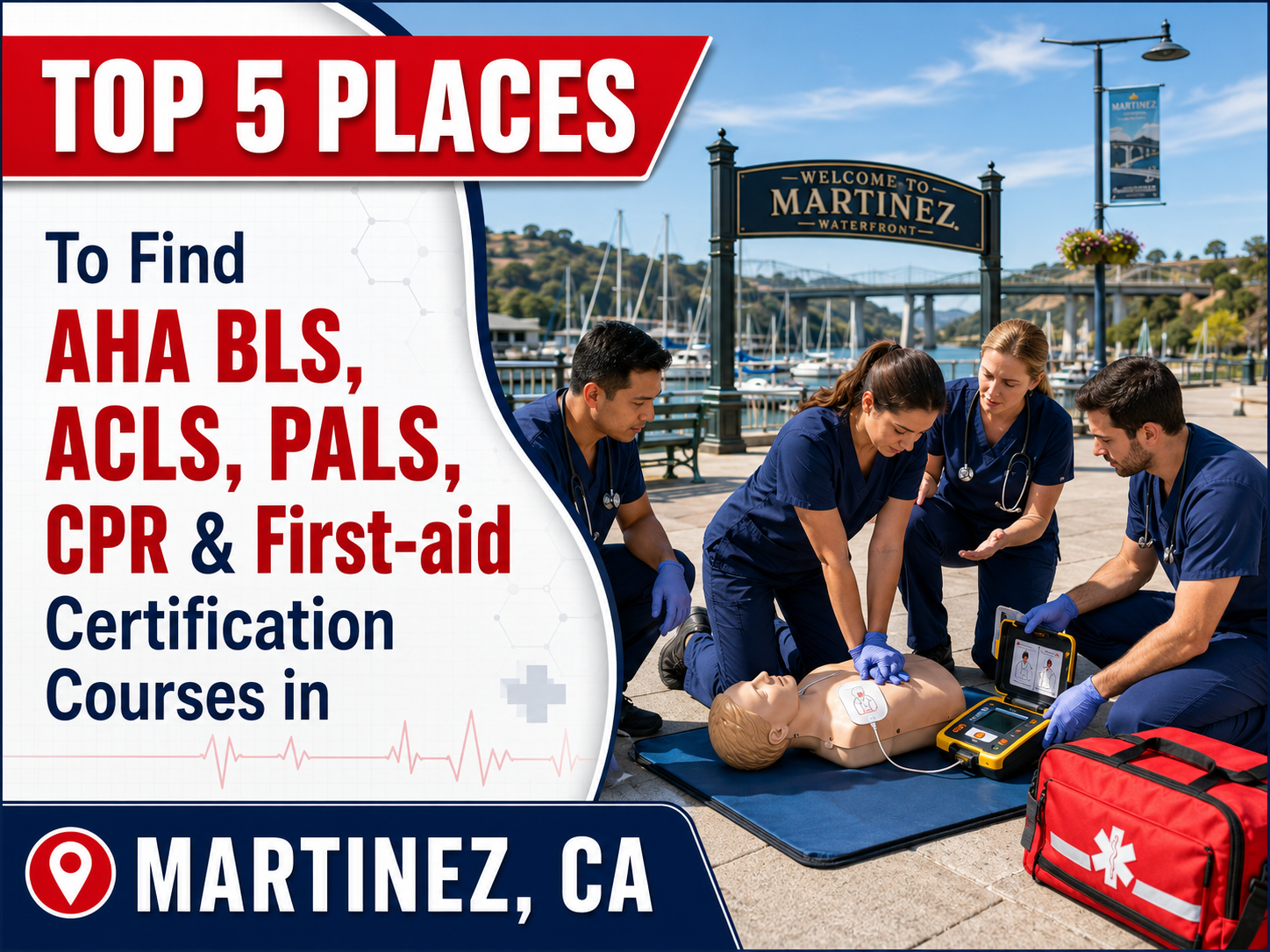
Taking your first professional resuscitation class can raise practical questions about course selection, testing formats, and employer compliance. Healthcare personnel, medical students, emergency responders, and clinical staff entering Contra Costa County’s medical network frequently discover that standard CPR classes do not satisfy institutional mandates. Earning a BLS CPR Certification Course credential verifies that you possess the hands-on skills required to perform high-quality cardiopulmonary resuscitation in clinical and emergency environments.
Understanding what happens during training eliminates pre-class uncertainty. From mastering bag-valve-mask (BVM) ventilation to passing the hands-on skill evaluation, knowing the exact expectations helps first-time students prepare effectively. This guide covers certification requirements, course structures, hands-on practice expectations, and how to access local training options in Martinez and the surrounding East Bay communities.
Key Takeaway: Basic Life Support (BLS) is designed specifically for healthcare providers and clinical personnel, focusing on team-based resuscitation and advanced airway management. Non-healthcare workers, such as teachers or fitness trainers, usually require general CPR/First Aid instead. Always confirm credential requirements with your employer or school before registering.
What Is Basic Life Support (BLS)?
Basic Life Support represents the clinical baseline for healthcare professionals. Unlike lay-responder CPR courses designed for general workplace safety, BLS instruction assumes the student works within, or is entering, a professional healthcare environment.
The curriculum covers systematic patient assessment, high-quality chest compressions, team dynamics, and early defibrillation using Automated External Defibrillators (AEDs). Training also includes single-rescuer and multi-rescuer protocols for adults, children, and infants.
First-time students often confuse general CPR with BLS. If your position involves direct patient care, clinical rotations, or professional medical licensing, licensing boards and clinical directors almost universally mandate a BLS card rather than a general CPR certificate.
Workplace and Clinical Requirements in Contra Costa County
Healthcare institutions across Martinez and greater Contra Costa County maintain strict safety and credentialing standards. Nursing students entering clinical rotations, dental hygienists renewing licensure, and hospital staff assigned to inpatient units must present active certification cards.
Hospital and Outpatient Care
Clinical facilities, surgery centers, and outpatient clinics throughout Martinez require personnel to maintain active BLS cards. Staff members involved in direct patient care must show proof of passing both a written exam and a physical skills check on standardized equipment.
Emergency Medical Services and Allied Health
Paramedics, EMTs, phlebotomists, and radiologic technologists must complete BLS training to maintain active state certifications. Respiratory therapists and advanced practice personnel often build upon this foundation with specialized clinical courses later in their careers.
Dental and Medical Practices
The Dental Board of California and the Medical Board of California mandate certified basic life support training for licensed professionals who handle patient care procedures. Annual or biennial renewals ensure staff members remain proficient in multi-rescuer resuscitation.
What to Expect During Your First BLS Class
First-time students often wonder how interactive or physically demanding the class will be. Modern BLS courses prioritize physical practice over long lectures, ensuring every student gets ample time with feedback mannequins.
1. Hands-On Skill Practice
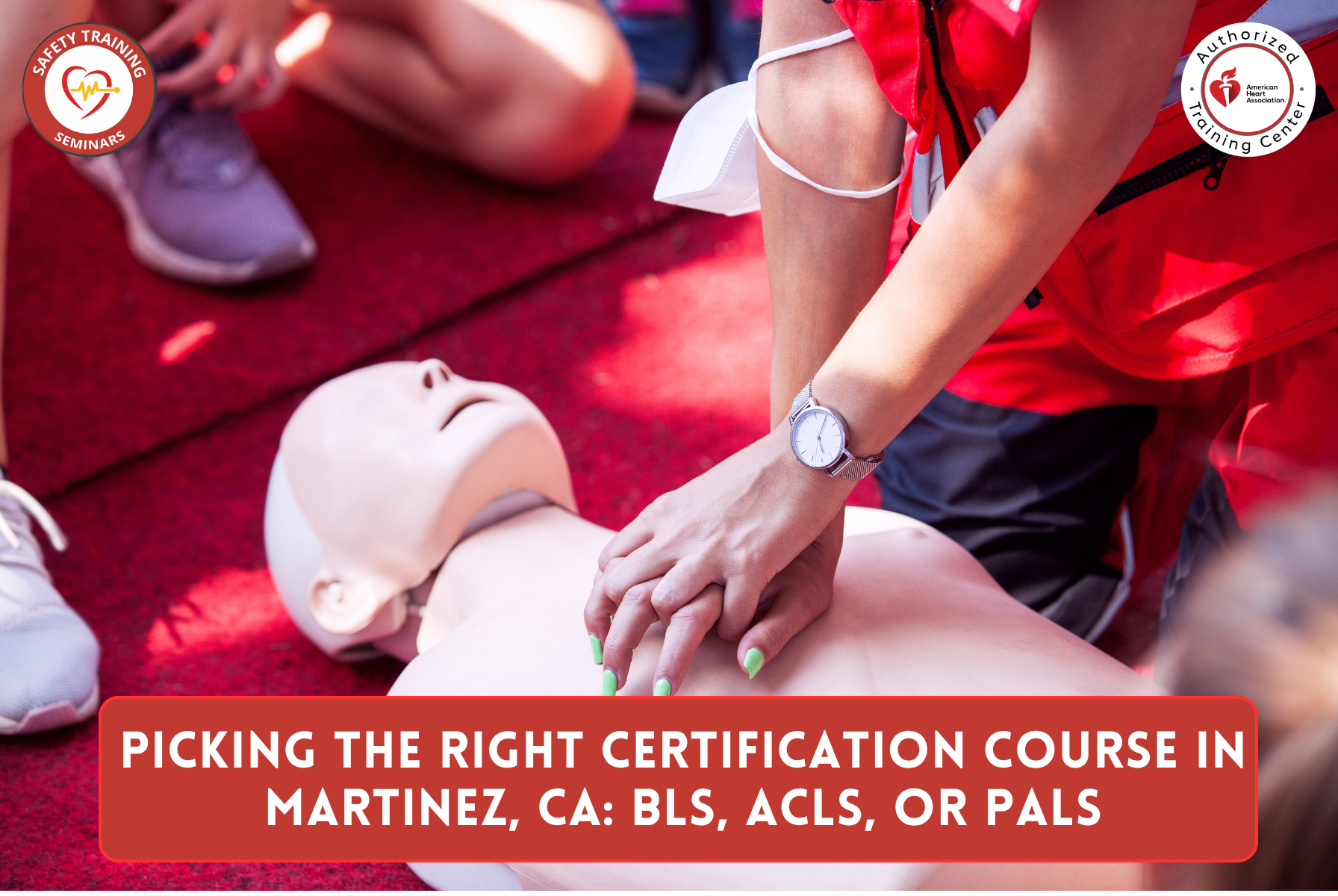
You will practice chest compressions on adult, child, and infant mannequins. Instructors emphasize maintaining a chest compression rate between 100 and 120 compressions per minute while allowing full chest recoil between compressions.
2. Ventilation Techniques
Students learn to operate bag-valve-mask (BVM) devices, which require proper seal technique and precise squeeze volume to deliver effective ventilations without over-inflating the lungs.
3. Automated External Defibrillator (AED) Training
You will operate trainer AED units to practice electrode pad placement, clear prompts, shock delivery, and immediate resumption of chest compressions.
4. Two-Rescuer Team Dynamics
Because hospital and emergency care relies on coordinated care, you will practice switching roles seamlessly with a partner to minimize interruptions in chest compressions.
5. Foreign-Body Airway Obstruction
Classes cover conscious and unconscious choking protocols across adult, pediatric, and infant patient profiles.
How to Prepare for Your Class
Arriving prepared helps you pass both the practical skills check and written assessment without unnecessary stress.
- Wear Movable Clothing: You will spend significant time kneeling on the floor next to adult mannequins. Wear comfortable pants and non-slip, closed-toe shoes.
- Review Core Terminology: Familiarize yourself with basic anatomical landmarks (such as the lower half of the breastbone for compressions) and standard compression-to-ventilation ratios (30:2 for single rescuers, 15:2 for two-rescuer pediatric scenarios).
- Bring Required Documentation: If you choose a blended learning option (completing initial coursework online), print or download your online completion certificate to present to the instructor before your skill evaluation.
Course Options with Safety Training Seminars
Selecting a local classroom simplifies earning or maintaining your professional credentials. Safety Training Seminars Martinez CPR Training Center Address is 535 Main Street, Suite 307, Martinez, CA 94553. Located near downtown historic landmarks and regional county offices, this facility gives local residents a direct option for completing hands-on certifications.
Having a specialized facility in central Contra Costa County serves students and working clinicians who want to complete initial certifications or routine renewals close to home. Safety Training Seminars maintains facilities across the East Bay, making it straightforward to find scheduling options that fit varied shift schedules.
For instance, healthcare personnel residing near Highway 24 can register for ACLS certification training in Lafayette, CA or schedule nearby PALS classes for healthcare professionals in Concord, CA. Those working along the northern waterfront corridor can access local CPR and First Aid certification courses in Hercules, CA or book American Heart Association BLS classes in Brentwood, CA to fulfill immediate licensing obligations.
In-Person vs. Blended Learning: Which Format Fits You Best?
First-time students can choose between traditional classroom instruction and blended learning formats.
Full In-Person Classroom Training
This traditional format brings students into a classroom for the entire session. An instructor guides the class through video modules, hands-on practice, and real-time coaching, followed immediately by the final skills test and written exam. This format works well for visual and tactile learners who prefer direct guidance throughout the entire process.
Blended Learning (Online + In-Person Skill Check)
Blended learning allows students to complete the cognitive portion of the course online at their own pace. Once finished, you attend a brief in-person skills session to demonstrate chest compressions, BVM ventilation, and AED operation on physical mannequins. Healthcare workers balancing long hospital shifts often prefer blended learning because it minimizes physical classroom hours.
Note on Online-Only Certificates: Beware of websites offering 100% online CPR cards that do not require an in-person mannequin test. Hospital credentialing offices, nursing schools, and state licensing boards routinely reject online-only certificates because they do not verify physical competence.
Frequently Asked Questions
Do first-time healthcare students need to take a written exam during BLS?
Yes. Official BLS courses include a short written exam covering resuscitation protocols, compression rates, AED safety, and team roles. Reviewing the student manual or online modules before class ensures you can complete the exam without difficulty.
How long does a BLS certification card remain active?
BLS certification cards are valid for two years. The credential remains active through the final day of the month in which you took the course. You must complete a renewal course prior to that expiration date to maintain continuous certification.
What should I do if my BLS card has already expired?
If your certification has lapsed, most organizations require you to complete a full initial BLS course or standard renewal session to restore valid credentials. Confirm your employer’s specific policy regarding grace periods, as clinical facilities generally do not permit uncertified staff to handle patient care.
Is BLS the same course as CPR/AED for general employees?
No. General CPR/AED classes are intended for non-healthcare personnel like office workers, gym managers, and warehouse supervisors. BLS covers advanced clinical topics like two-rescuer CPR, bag-valve-mask ventilation, and pulse checks, which general CPR courses omit.
Can I take a BLS course if I am not currently working in healthcare?
Yes. Pre-med students, nursing applicants, home health aides, and interested community members can enroll in BLS training without prior medical experience. Instructors explain foundational concepts so first-time students can build physical competency during class.
Preparing for your first resuscitation course does not have to be overwhelming. By selecting the correct course format, reviewing key protocols ahead of time, and practicing hands-on skills under instructor guidance, you can fulfill your professional obligations with confidence. Explore available course dates at Safety Training Seminars to secure a class schedule that aligns with your clinical or academic goals.