Residential neighborhoods stretching from Alhambra Valley up toward the hills, bustling commercial corridors along Main Street, and busy industrial zones near the Carquinez Strait create a diverse daily landscape in Martinez, California. People living and working in this historic East Bay seat often seek out reliable emergency-response education to keep pace with workplace safety regulations, school mandates, or personal caregiving duties. Finding the right program starts with understanding what emergency training involves and how local options fit everyday schedules.
For residents and workers searching for American Red Cross CPR and First Aid classes in Martinez, CA, training choices range from basic adult CPR courses to comprehensive blended programs combining adult, child, and infant instruction with automated external defibrillator operation.
What Are American Red Cross CPR and First Aid Classes?
Emergency preparedness education typically bridges two core disciplines: cardiopulmonary resuscitation and general medical response.
CPR training focuses on responding to sudden cardiac arrest. Participants learn how to recognize when an individual’s heart has stopped beating effectively, how to deliver chest compressions to maintain minimal blood flow to vital organs, and how to provide rescue breaths where applicable.
First Aid education covers a broad spectrum of sudden illnesses and injuries that do not necessarily involve cardiac arrest. This branch of training teaches responders how to manage severe bleeding, stabilize sprains and strains, recognize signs of shock, assist during allergic reactions, and handle environmental emergencies.
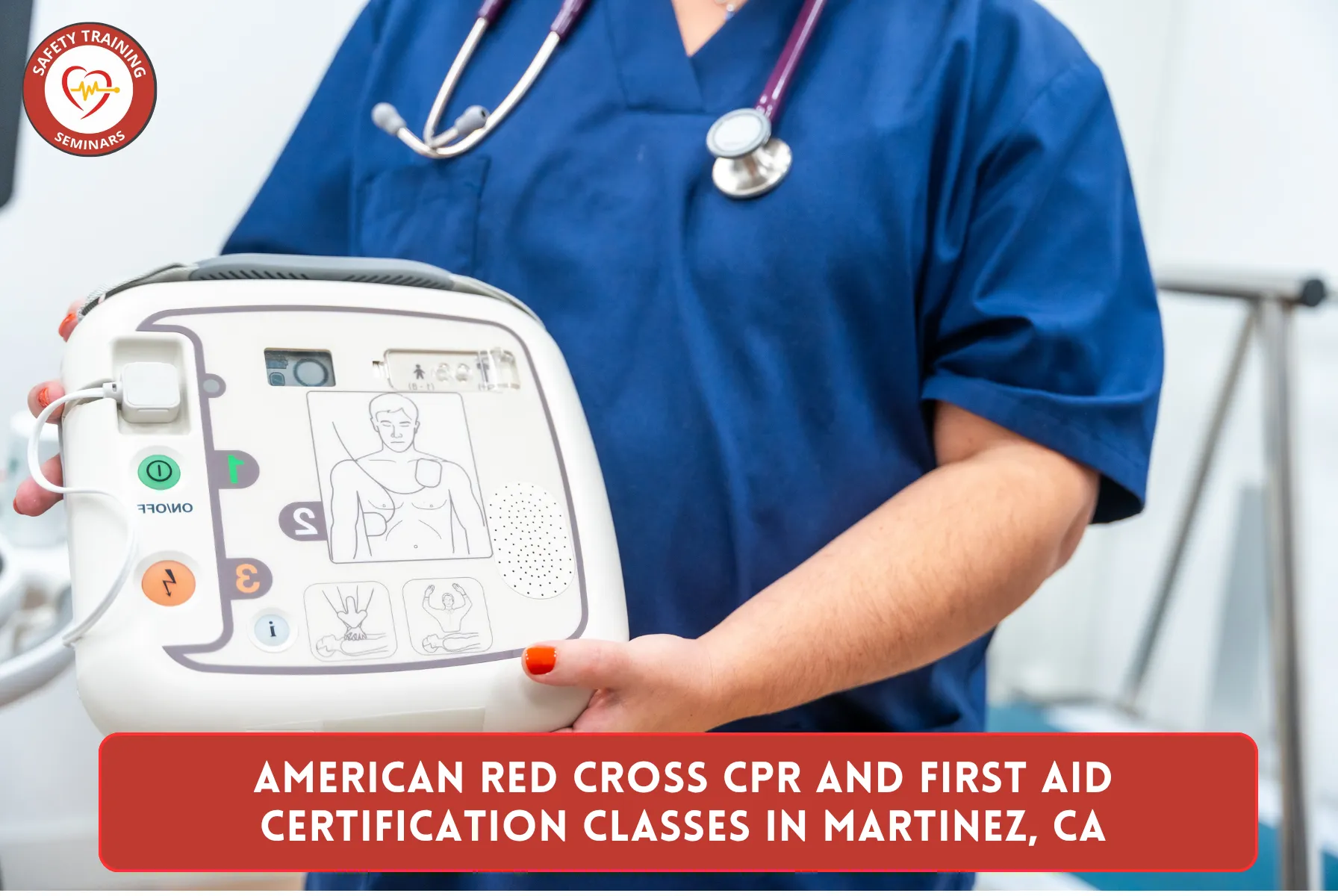
Automated External Defibrillator training is frequently integrated into these sessions. An AED device analyzes heart rhythms and delivers an electric shock if needed to restore a normal heartbeat. Because early defibrillation drastically improves survival rates during sudden cardiac arrest, AED instruction pairs naturally with chest compression practice.
Courses often combine these subjects into a unified curriculum, such as a multi-topic First Aid and AED training in Martinez, allowing participants to build versatile response capabilities in a single session. Hands-on practice with manikins and training devices is essential for developing the muscle memory and confidence required during actual crises. Because different professions and institutions hold distinct standards, individuals should always verify their specific training requirements before enrolling.
CPR Training in Martinez
Cardiopulmonary training is rarely a one-size-fits-all offering. Depending on the intended audience, courses adjust their focus to specific age groups and physical requirements.
- Adult CPR: Concentrates on teenage and adult cardiac emergencies, emphasizing deep, steady compressions and proper airway management.
- Child and Infant CPR: Adapts compression depth and rate for younger bodies, addressing pediatric-specific respiratory emergencies like choking or near-drowning.
- Workplace CPR Needs: Tailored for office workers, warehouse staff, and municipal employees who need documented proof of emergency competency to satisfy internal safety policies.
- Professional Requirements: Geared toward individuals whose employers demand specific credentialing for job security or advancement.
Exact course content depends entirely on the specific American Red Cross syllabus selected. Choosing a format that matches daily responsibilities ensures that learners gain relevant, actionable skills without wasting time on extraneous material.
First Aid and AED Training in Martinez
While cardiac emergencies demand immediate physical intervention, daily environments present many other health hazards. Teachers managing active schoolyards, fitness instructors supervising heavy weight rooms, and industrial workers handling tools near the waterfront encounter diverse medical situations.
First Aid and AED education equips these groups to manage scenarios ranging from minor cuts and burns to severe allergic reactions and sudden stroke symptoms. Teachers and childcare providers frequently require specialized modules that address pediatric illnesses, while fitness professionals often need quick-response protocols for exertional heat illness or sudden collapse.
When employees or community members complete local CPR training options, they gain a structured framework for assessing scenes safely, calling for professional medical help, and providing interim care until emergency responders arrive.
Who Typically Takes These Classes?
Emergency-response courses serve a wide cross-section of the local community. Different groups seek certification for distinct personal and professional reasons:
- Teachers and Childcare Providers: Educators in local schools and preschool centers often need verified credentials to comply with state childcare licensing rules.
- Workplace Employees: Designated safety wardens and industrial workers take classes to satisfy OSHA compliance or internal company risk-management guidelines.
- Coaches and Fitness Professionals: Gym staff and youth sports leaders complete training to handle sudden athletic injuries or cardiac events on the field.
- Parents and Caregivers: Family members living with infants, young children, or aging relatives enroll voluntarily to ensure household safety.
- Students: High school and college students pursuing careers in healthcare, education, or social services complete certification to meet clinical or internship prerequisites.
How to Choose the Right Course
Selecting an appropriate training path requires matching course types to real-world obligations.
| Training Type | Typical Focus | Primary Use |
| CPR | Single-rescuer chest compressions and rescue breaths | Basic workplace or personal preparedness |
| First Aid | Managing injuries, bleeding, and sudden illnesses | General workplace safety and compliance |
| CPR/AED | Combining chest compressions with automated defibrillator use | Public access facilities and offices |
| First Aid/CPR/AED | Comprehensive multi-topic emergency response | Childcare, education, and broad safety roles |
Note: Certification mandates are determined by external organizations. Always confirm precise compliance criteria with your employer, school administrator, or licensing board before registering for a class.
Local Martinez Training Considerations
Martinez occupies a unique niche in Contra Costa County, blending historic downtown architecture with active industrial corridors, medical offices, and schools. Professionals commuting along Marina Vista or Highway 4 often look for accessible training facilities close to local employment hubs.
Educational staff from local institutions, municipal workers maintaining public parks, and retail personnel stationed along Main Street frequently require flexible scheduling options that fit around demanding shifts. Because local businesses range from waterfront maritime operations to healthcare support offices, workers need training paths that align precisely with their industry’s regulatory demands. Finding a nearby classroom helps minimize travel time and allows participants to focus fully on skill acquisition.
Safety Training Seminars in Martinez
For residents seeking reliable certification close to home, Safety Training Seminars provides accessible instruction right in the community. The local training center is conveniently situated at 535 Main Street, Suite 307, Martinez, CA 94553.
Attending classes at a physical location allows participants to practice chest compressions on realistic manikins, handle training AED units, and receive direct, real-time feedback from experienced instructors. Reviewing course prerequisites and schedules ahead of time ensures that students select the exact module required by their employer or academic program.
Why Choose Safety Training Seminars for CPR and First Aid Training in Martinez, CA
Choosing a local training provider helps streamline the certification process for busy professionals and community members. Safety Training Seminars offers focused classes designed around practical skill retention.
Participants benefit from structured curricula, straightforward registration procedures, and a central downtown location that makes attendance straightforward for residents throughout the area. Reviewing available course dates on the CPR classes near Martinez page allows learners to find sessions that fit their calendars while fulfilling professional development goals.
FAQs
What CPR classes are available in Martinez?
Options range from basic adult CPR to comprehensive multi-topic modules that include child and infant care, AED operation, and First Aid instruction. Course availability varies depending on current scheduling, so checking local listings is recommended.
Do childcare workers and teachers need CPR and First Aid certification?
Many schools, preschools, and state-regulated childcare facilities require staff to hold current certification. Requirements depend on specific institutional policies and state licensing guidelines, so educators should verify mandates with their administrators.
How do I know whether to take CPR alone or First Aid/CPR/AED combined?
Your choice depends on your specific obligations. If your employer or school requires general injury response alongside cardiac rescue, a combined First Aid/CPR/AED course is usually necessary. Always check your organization’s specific requirements.
Does an employer accept American Red Cross training?
Most employers and regulatory bodies accept American Red Cross credentials, but policies vary across different industries and healthcare institutions. It is always wise to confirm acceptance with your human resources department before enrolling.
Is hands-on practice included in these classes?
Yes, in-person training includes practical sessions where participants practice chest compressions, use training AEDs, and perform bandaging techniques under instructor supervision to build real-world confidence.
Conclusion
Obtaining proper emergency-response credentials is a practical way to protect coworkers, students, family members, and neighbors across Martinez. Understanding the differences between CPR, First Aid, and AED operation ensures you choose a program that genuinely meets your needs. To take the next step, review local course requirements and explore the local emergency-response training options available through Safety Training Seminars. Confirm your organization’s specific compliance standards today and register for a class that matches your professional or personal goals.