A Central Contra Costa Location for Childcare Training
Martinez is the county seat of Contra Costa County, sitting along the Carquinez Strait where Highway 4 and Interstate 680 meet near the Benicia-Martinez Bridge. That position makes downtown Martinez a practical meeting point for providers across central and western Contra Costa County, and even for some who cross the bridge from Solano County.
Childcare professionals from Martinez, Pleasant Hill, Pacheco, Concord, Lafayette, Hercules, Crockett, and Benicia may find the Main Street training center a reasonable option when they need Preventive Health and Safety training without traveling deep into the Bay Area.
What EMSA Preventive Health and Safety Training Means
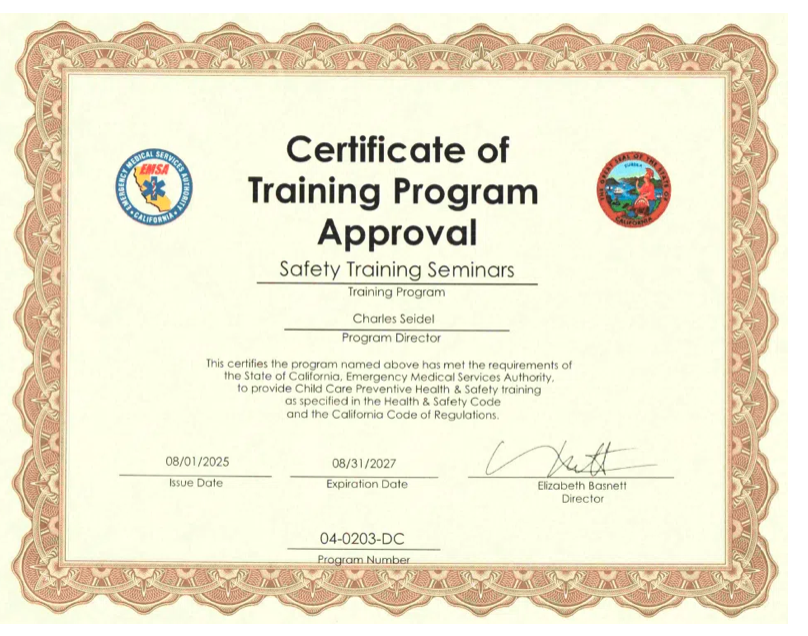
EMSA is the California Emergency Medical Services Authority. Among its responsibilities, EMSA approves the health and safety training programs that childcare providers use to meet California standards.
Childcare health and safety training in California generally comes in two parts. EMSA Pediatric CPR and First Aid teaches providers how to respond to emergencies. The EMSA Preventive Health and Safety Course teaches them how to keep many of those emergencies from happening at all. Safety Training Seminars presents its Preventive Health course as an 8-hour program covering infectious disease prevention, injury prevention, caring for children with special needs, child abuse reporting, nutrition, and Lead Poisoning Prevention.
Licensing Rules Depend on Your Role and Facility
Licensed childcare in California is regulated by Community Care Licensing, part of the California Department of Social Services. Community Care Licensing sets training standards for both Child Care Centers and Family Child Care Homes, but those standards are not identical for every caregiver.
A Martinez resident applying for a Family Child Care Home license, a director at a Concord preschool, and a part-time aide at an after-school program may each have different obligations. Your facility type, position, licensing status, employer policies, and the regulations in effect at the time all matter.
Before signing up for any childcare licensing class, confirm what applies to you with your Community Care Licensing regional office or your employer. This page is meant as general information and should not be treated as legal or regulatory advice.
Protecting Young Children From Lead Exposure
Lead is a concern for any program serving infants, toddlers, and preschoolers. Young children explore by touching everything and putting hands and objects in their mouths, and their developing bodies absorb lead more easily than adult bodies do. Even small amounts can affect learning and behavior over time, and a child with elevated lead levels may show no obvious signs.
Martinez has plenty of older homes and buildings, and many Family Child Care Homes operate inside private residences. That makes lead awareness especially practical for home-based providers. During the Lead Poisoning Prevention portion of the training, caregivers learn to spot potential sources such as chipped paint, dust around older windows and doors, bare soil in play yards, and certain imported toys, spices, cosmetics, or pottery.
The training also focuses on habits that reduce risk every day: handwashing before meals and after outdoor play, damp-mopping and wet-wiping instead of dry sweeping, and keeping play areas in good repair. Providers also learn how to share prevention information with parents and encourage them to ask their child’s doctor about blood lead testing. Contra Costa Health runs a county Lead Poisoning Prevention Program that families and providers can turn to for additional local information.
Mealtime, Special Diets, and Children’s Health
Feeding children in a group setting means juggling many needs at once. The nutrition section of the course helps providers plan meals and snacks that suit each age group while staying alert to individual health needs.
Food allergies are a daily reality in many programs. Providers learn why careful label reading, separate preparation surfaces, and strict adherence to each child’s care plan matter so much.
Specialized diets may be cultural, religious, or medically required. The training helps caregivers respect those diets without sacrificing balanced nutrition.
Diabetes and other health conditions can require predictable meal and snack timing and close communication with parents about a child’s plan.
Feeding and growth concerns, such as ongoing refusal to eat or noticeable changes in a child’s growth, are worth noting and discussing with families.
Dental health starts early. Limiting sugary drinks and avoiding bottles at naptime are simple habits that protect young teeth.
Contra Costa County providers also have a strong local nutrition resource. CocoKids, the county’s childcare resource and referral agency, offers child health and nutrition education and runs a Food Program that provides training, support, and meal reimbursement to licensed Family Child Care Homes.
Clean Spaces, Healthier Children
Illness spreads quickly wherever small children share toys, tables, and restrooms. The environmental sanitation portion of Preventive Health and Safety training gives caregivers routines they can follow consistently.
Topics include safe food handling and kitchen cleanliness, correct diapering steps from start to finish, toilet and sink sanitation, regular cleaning of toys and high-touch surfaces, and good indoor air quality through ventilation. For providers caring for children in their own homes, setting clear boundaries between family spaces and childcare spaces makes these routines easier to maintain.
Martinez-Area Providers and Students Who Take the Course
The EMSA Preventive Health and Safety Course draws a mix of learners. Common participants include Family Child Care Home licensees and applicants, Child Care Center directors and teachers, preschool aides, after-school staff, and nannies who want stronger health and safety skills.
Early childhood education students are another group. Diablo Valley College in nearby Pleasant Hill offers an Early Childhood Education program with hands-on experience in its on-campus Children’s Center, and its coursework addresses strategies for supporting children’s health, safety, and nutrition. Students and new hires should check with their school or employer to learn exactly which certifications they need.
For families and providers in Martinez, CocoKids’ Central Area office in Concord handles childcare referrals and serves Martinez, Pacheco, Pleasant Hill, and surrounding communities.
Training With Safety Training Seminars in Martinez
Safety Training Seminars has offered CPR and emergency training in the Bay Area since 1989. At its Martinez location, childcare providers can take both the EMSA Preventive Health and Safety Course and EMSA Pediatric CPR and First Aid, which is convenient for anyone who needs both parts of their childcare health and safety training. Safety Training Seminars also lists an online Zoom option for the Preventive Health course.
Start Your Childcare Health Training in Downtown Martinez
The skills taught in this course show up in ordinary moments: checking a label before serving a snack, disinfecting a changing table between children, or noticing peeling paint before a toddler does. Those routines help children stay healthier and give parents confidence in the care their children receive.
Once you have confirmed your requirements with Community Care Licensing, you can find an upcoming EMSA Preventive Health and Safety class and complete your EMSA Childcare Health & Safety Certification at the Martinez training center on Main Street or through the online Zoom option.